

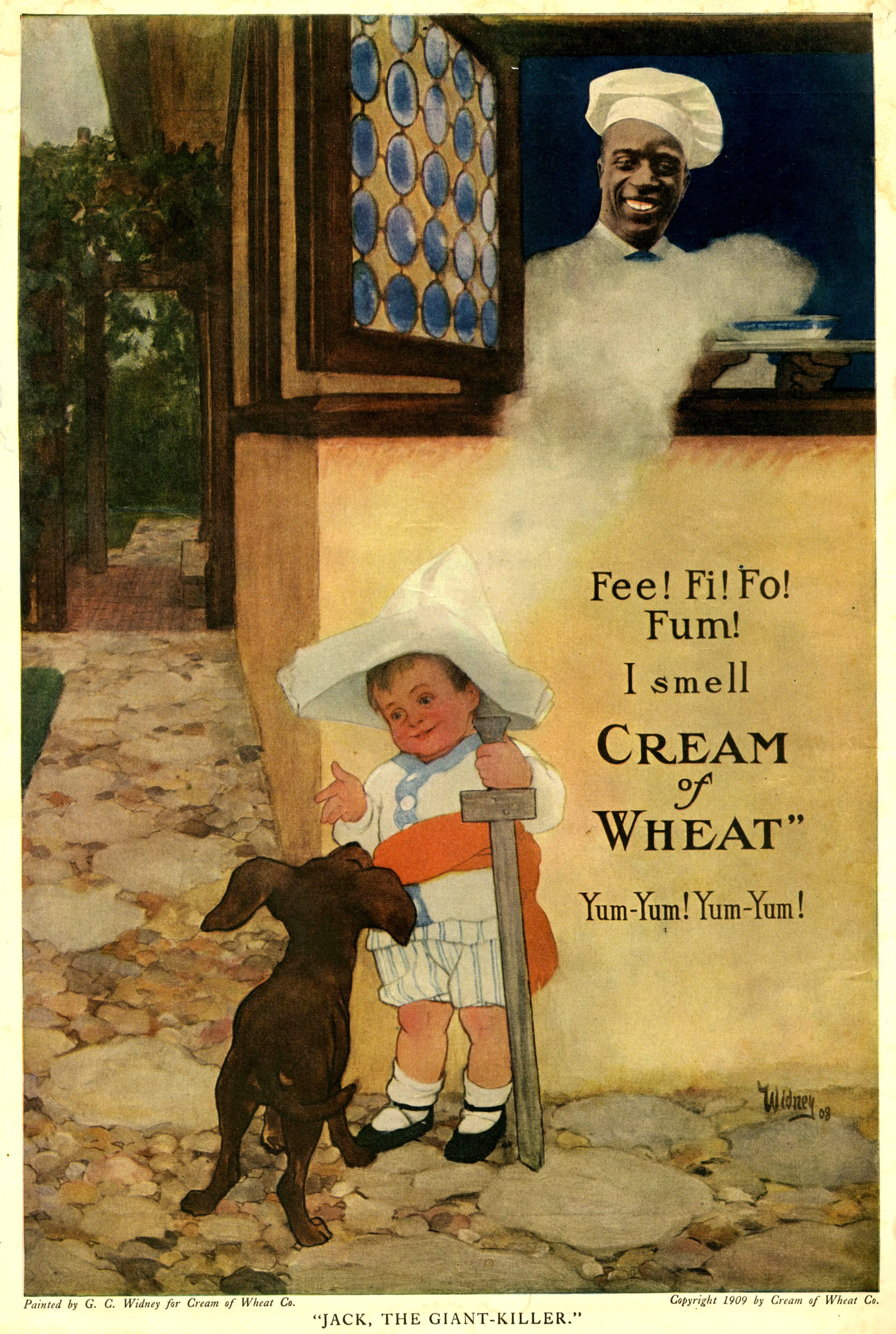
Cream of Wheat advertisement, 1909. An advert typical of those found in the Williams collection.
The Edward J. Williams collection.
In 2023, the Rebuild Foundation contracted me in an advisory capacity after receiving a grant from the Mellon Foundation. Rebuild had earmarked a substantial portion of the funds to improve access to four collections: a set of 60,000 glass lantern slides, the record collection of Chicago DJ Frankie Knuckles, the Johnson Publishing Company Library, and a large collection of artifacts from the Edward J. Williams Collection. In broad strokes, my job was to help Rebuild think through priorities, processes, and staffing so it could make the most of its funding in the time available. Part of this work involved planning for at least three of the four collections to move to the Land School, Rebuild’s offshoot campus, where the materials would be even more accessible to the community the organization serves.
Once we’d established basic parameters for the lantern slides and the Johnson Publishing Company Library, I turned my attention to the Ed Williams collection. (The Frankie Knuckles collection was already being digitized by a robust team of staff and interns who were doing an amazing job without me.) Switching hats from advisor to service provider, I brought on an assistant to help with the arrangement, rehousing, and inventory of the Ed Williams collection, which turned out to be one of the most interesting collections I’ve ever worked on.
The Edward J. Williams collection comprises an extraordinary array of material acquired over many decades by Chicago banker Ed Williams, a collector intent on removing “negrobilia,” in his terms, from the commercial marketplace. These collectibles depict racist stereotypes of African Americans. In pursuit of this goal, Williams acquired more than 4,000 objects, both decorative and functional, as well as published works, sheet music, pamphlets, and advertisements, all sharing a common language or visual iconography that negatively caricatured African Americans. He also collected national and regional newspapers and original manuscripts.
Organizing, inventorying, and rehousing the collection took more than six months of dedicated work, including consulting and subcontracting with a paper conservator to address mold remediation in some of the historic newspapers.
